what can cause a person to get red face
As the pandemic progresses, nosotros're growing increasingly aware COVID-19 affects multiple parts of the body beyond the lungs. That includes the skin.
We've seen reports of pare symptoms ranging from "COVID toes" to hair loss, and different types of rashes.
Some skin symptoms announced soon afterward infection, while others arise afterward or in more astringent disease. Most get amend with fourth dimension.
Researchers are also kickoff to work out what causes these skin conditions, whether it'due south the torso's immune response to infection, or whether hormones are involved.
Here are some of these symptoms, from the most mutual to the least:
1. widespread pocket-size carmine bumps and multiple flat scarlet patches. These so-chosen maculopapular eruptions are associated with more than severe disease
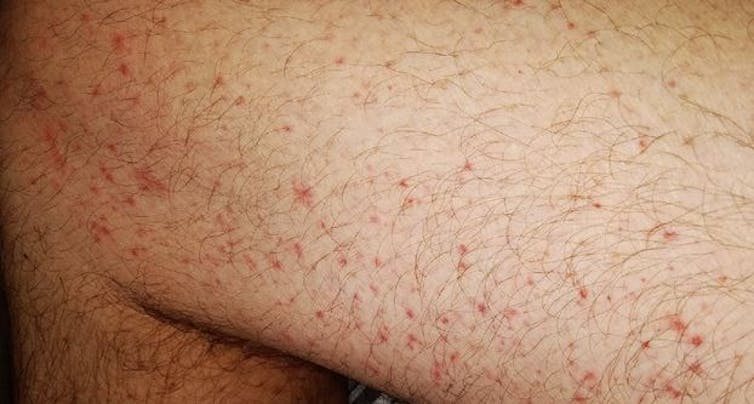
2. redness of the whites of the eyes. This conjunctivitis is most common later in the disease and in more than astringent disease
three. chilblain-like symptoms, commonly called 'COVID toes'. These can affect hands or feet, or both at the same fourth dimension. The red-purple discoloured skin can be painful and itchy, and in that location are sometimes small blisters or pustules. These chilblain-like lesions often announced tardily in the illness, subsequently other symptoms, and are most common in children
four. hives or urticaria are pinkish or ruby-red itchy rashes that may appear as blotches or raised carmine lumps (wheals). They range from the size of a pinhead to a dinner plate. Swellings usually disappear within minutes to hours in one spot, but may come and get. Generally hives clear within ten days. They occur at the same time every bit other symptoms, in all ages, and are associated with more severe disease
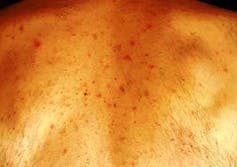
5. h2o blisters, or vesicular eruptions, are small-scale fluid-filled micro-blisters that may appear early in the disease or at any time, ofttimes on the hands. Middle‐aged patients suffer more commonly. The blisters terminal just over 10 days, and are associated with medium-severity affliction
6. 'fishing internet-like' ruby-red-blueish pattern on the peel, or livedo, sometimes with tiny bruises (purpura), is associated with more severe disease and older historic period groups. This design is thought to be due to blockages of the blood vessels that arise as part of the body's immune response to the virus
vii. rash associated with multisystem inflammatory syndrome in children or MIS-C. This "allowed system overdrive" triggers an inflammation of the heart and claret vessels, resulting in blood clots and symptoms of shock. This very rare complication can occur up to three months after a child has had COVID-nineteen
eight. hair loss (telogen effluvium) occurs in many severe illnesses, including COVID-19. This is the body shutting down unnecessary activeness in times of stress. Provided people's iron levels are normal, the hair will recover in time
COVID-19 serious enough to take people to hospital also seems to exist more common in people with male person-pattern alopecia. One study plant upwardly to 79% of infirmary admissions for COVID-19 were balding men.
An increased level of the hormone dihydrotestosterone is thought to increment the numbers of ACE2 receptors, which is how the virus enters the body. In other words, male person-pattern baldness may predispose people to more astringent affliction.
Baca juga: Hither'due south what we know so far about the long-term symptoms of COVID-19
What could be causing these symptoms?
Some of the COVID-19 rashes are not caused by the virus itself, only by the body's immune response to the virus.
For example, research suggests some may be caused by over-activation of a office of the immune system known as the "complement" response. This leads to the blood vessel impairment seen in the chilblain-type symptoms (point 3 in a higher place) and in livedo (point 6).
Complement activeness is as well increased in elderly people and may well explain many of the more serious COVID-nineteen outcomes we come across in this age group.
How do I know if my pare rash is COVID-19?
If you're concerned about whatsoever skin symptoms, check them confronting the photos in this article. So you lot tin consult your GP or dermatologist via a telehealth engagement for further communication.
You lot might be infectious. Get tested and self-isolate until y'all receive your test results. If y'all feel unwell, your GP or COVID clinic volition be able to coordinate your care.
Baca juga: My pare's dry with all this manus washing. What can I do?
Source: https://theconversation.com/8-ways-the-coronavirus-can-affect-your-skin-from-covid-toes-to-rashes-and-hair-loss-144483
0 Response to "what can cause a person to get red face"
Post a Comment